Introduction
Have you ever paused and wondered why a clean shop still smells of burned plastic after a long laser run? In many small shops and labs the answer often lies in the extraction—the humble laser marking fume extractor that either does its job or lets the smell (and the hazard) linger. I look at numbers a lot: recent shop audits show up to 40% variance in particulate capture between older units and modern systems. So how do we stop guessing and start choosing with confidence? (Bear with me—this will be practical.)
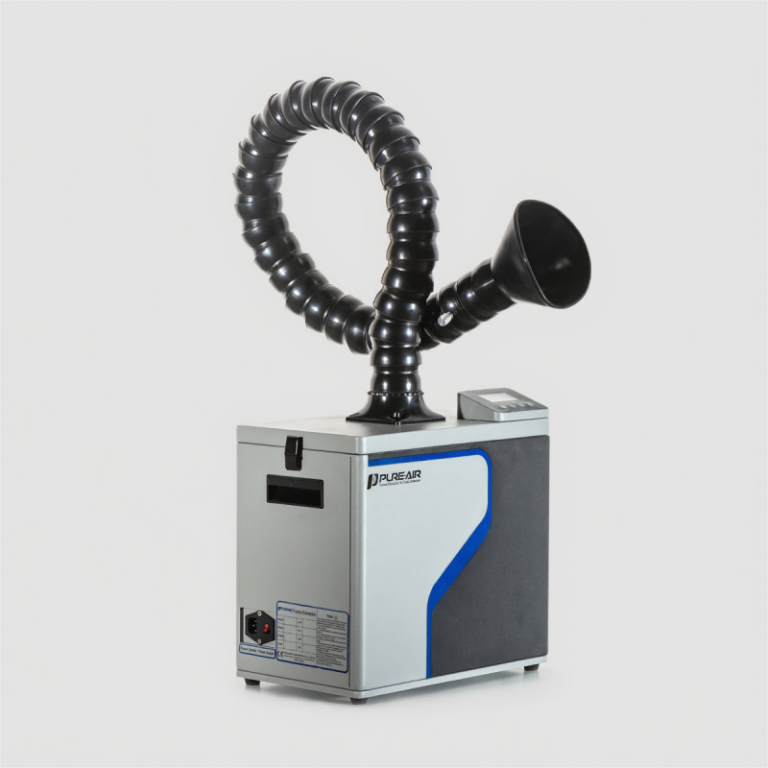
I write here as someone who has rolled up sleeves beside technicians and breathed the same stale air; I care about safety and about machines that perform. This piece will lay out the real trade-offs, step by step, and lead you toward clear criteria for decision-making. Next, I’ll dig into what usually goes wrong beneath the surface.
Traditional Solution Flaws and Hidden User Pain Points
Why do common systems fail?
I begin with the core topic: laser marker fume extractor. Many sellers market flow rates and filter types, but they rarely address how those specs behave in real workflows. In my experience, three patterns repeat: undersized extraction hoods, mismatched filter stages, and poor maintenance signaling. The result? Lower filtration efficiency and more frequent downtime. I’ve seen shops swap filters monthly and still find visible smoke—frustrating, and costly.
Technically speaking, the issue is both mechanical and human. Fans can be oversized but poorly placed, creating dead zones near the workpiece; or the system uses a HEPA filter without an appropriate pre-filter, so the HEPA clogs fast. Add in inconsistent airflow velocity and you have uneven capture. Look, it’s simpler than you think: design must match the process. We must consider extraction hood geometry, filtration cascade (pre-filter, activated carbon, HEPA), and monitoring—edge computing nodes or basic differential pressure gauges—to judge true performance. — funny how that works, right?
Principles of New-Generation Extraction — What’s Next?
How can new principles change outcomes?
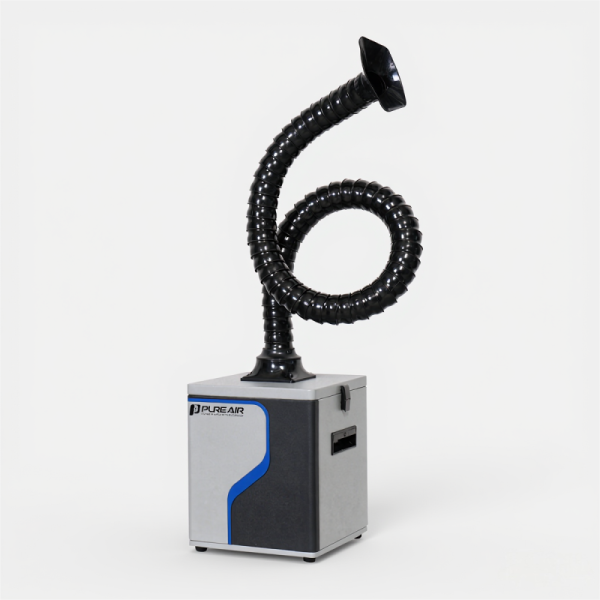
Now I shift to a forward-looking view. The next wave of systems treats the laser marker fume extractor as more than a fan-and-filter box. I prefer to think in terms of principles: targeted capture, staged filtration, and smart feedback. Targeted capture means designing extraction hoods and nozzle positions to match the laser path so contamination never escapes into the room air. Staged filtration combines pre-filters, activated carbon for VOCs, and HEPA for particulates; this lowers load on the HEPA and extends service life. I have tested units that cut total maintenance costs by nearly half—measurable, and frankly satisfying.
We must also embrace modest electronics: simple sensors for airflow and filter differential pressure, or occasional data logging via inexpensive power converters and local microcontrollers. These allow predictive maintenance instead of reactive swapping. The principles are practical, not futuristic. They demand attention to airflow patterns, filtration efficiency, and human factors—how easy is it to swap a filter, to clean an extraction hood? In short, pick systems that advertise specs and also prove them in the field. Here are three metrics I use to evaluate options:
1) Capture Efficiency at the source — measure with a particle counter at typical working distance.
2) Filter Cascade Life — estimated hours before service under your material load.
3) Usability & Serviceability — time to replace filter elements and access points (yes, this saves money on labor).
Weigh these, and you’ll choose better. I hope this helps you make decisions that save both health and budget. For reliable, proven solutions I often recommend looking at established providers who combine engineering with field testing—brands like PURE-AIR.