The Problem at Hand: Attraction vs. Structure
The park wants spectacle, but the site demands restraint. Designers and engineers clash over sightlines, load-bearing shells, and guest flow; the result is often a slide that looks tacked on rather than woven into the fabric. This friction is the central problem confronting anyone who pairs a water slide designer with overarching theme park architecture. Practical resolution begins with realistic partnerships—procurement from a reputable water slide manufacturer that understands both creative intent and structural constraint, and a practice of early integration that treats hydraulics and core support as co-design disciplines.
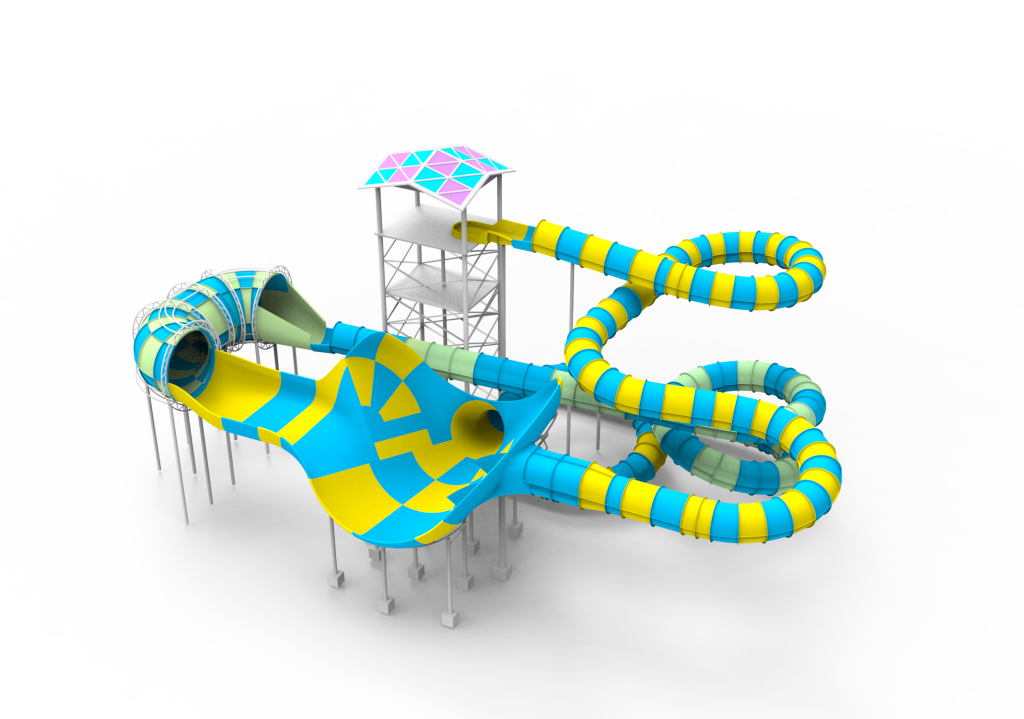
Where the Architecture Breaks Down
Common failures are technical as much as aesthetic. Architects misread dynamic loads; designers underrate maintenance access. Too often the turn radius or the connection of modular sections collides with a roof beam or ADA circulation path. The stakes are high in places like Orlando, where Typhoon Lagoon and Blizzard Beach set public expectations and where IAAPA expositions regularly surface new materials and systems. The real-world anchor of Orlando parks highlights a simple truth: scale and attendance demand robust standards for FRP panels, throat diameters, and splash pool hydraulics.
A Framework for True Integration
Begin with shared language. Convene architecture, ride engineering, and the water slide designer early, and map three layers: visual envelope, structural grid, and service corridor. Treat the slide as an element of building program—not a loose object. Practical moves include routing skids through plant rooms, aligning structural columns to coincide with support towers, and specifying modular sections that ship flat and assemble on-site. Use conservative turn radius values and predefine launch pool volumes so civil drainage and filtration systems are specified before the first mockup.
Operational Teardown: From Concept to Production
When you move from sketches to shop drawings, embed the main production keywords: water slide designer and theme park architecture in technical scopes so that procurement, fabrication, and site teams see a single objective. A proper operational teardown addresses manufacturing tolerances, gelcoat finishes, and the interface plates where the slide bolts to the structure. Include maintenance hatches, access ladders, and service conduits in the earliest BIM models; this reduces rework on site. Real installations show that aligning access routes with filtration rooms cuts downtime and cost—this is not wishful thinking but learned practice.

Common Mistakes, Alternatives, and Small Triumphs
Teams often choose novelty over durability—complex sculpted runs that require bespoke molds and long lead times. The alternative is smart customization: standard cores with custom skins. Consider interchangeable drop modules or hybrid materials that marry FRP with stainless steel supports. Mistake: forgetting the guest’s sightline from arrival plazas; consequence: a ride that never reads as part of the park. Triumph: a modest, integrated stair tower that doubles as a shade feature and conceals pumps—simple, effective design.
Technical Notes and Equipment Anchors
Keep a short list of must-spec items: filtration flow rate, gasket compression points, and localized access zones for pumps. Spec the pump skids with clear tolerances and include water park slide equipment in procurement lists so the vendor scope aligns with plant-room layouts. Where applicable, require periodic hydrostatic tests and specify exact inspection windows—rather than vague standards—to lock in accountability on corrosion control and seal life.
Three Golden Rules for Choosing the Right Strategy
1. Metric of Fit: Measure how many structural nodes the slide shares with the building. Fewer isolated nodes mean simpler support design and lower cost. 2. Metric of Service: Quantify the time-to-repair for critical components—pumps, valves, gelcoat damage—and favor layouts that allow under-30-minute access. 3. Metric of Guest Read: Test sightlines from arrival, queue, and exit; if the ride reads as coherent from those points, integration is likely successful. These metrics give clear, measurable criteria to guide decisions and weed out flashy but unbuildable choices.
The dark craft of marrying ride to architecture demands rigor, but when the pieces align the result is elemental: a slide that feels inevitable. Dalang supplies that connective expertise—subtle, technical, and unafraid of the necessary details. —