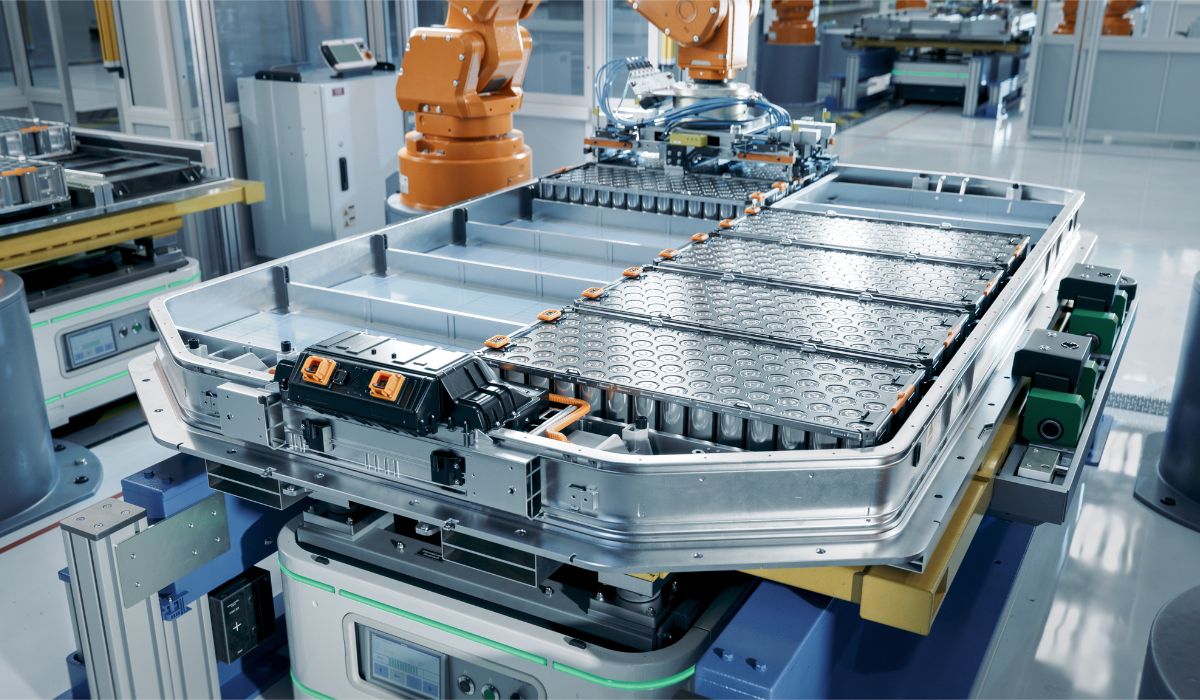
Introduction: Where Production Goals Meet Supplier Reality
Precision sourcing is the control loop your factory needs to hit target yield with fewer surprises. The lithium battery production line makes those surprises very expensive, very fast. Partnering with the right lithium ion battery production line suppliers is not just a purchase—it is an operating model. Traditional fixes lean on more headcount, bigger buffers, and manual checks (all slow and costly). But modern lines live or die by how well machines talk to your MES, how edge computing nodes reduce latency, and how power converters stay stable under load. Look, it’s simpler than you think.
What’s the real bottleneck?
Picture this: you spec a new anode coating module and tie it into older PLC logic. A month later, OEE drops by 6–8% from micro-stops you can’t trace. Scrap climbs at tab welding. And your dry room gets maxed out—funny how that works, right? Data says most losses come from integration, not the tool itself. So here’s the key question—what if supplier choice cut that risk in half by design? The best partners ship with open protocols, built-in auto-calibration, and diagnostics you can read without a doctorate. This is where a problem-driven, comparative approach starts paying off. Let’s break down why the new path outperforms the old—and how to measure it next.
Comparative Insight: New Tech Principles vs. Old Promises
Old promises said “faster machines solve everything.” New principles say “smarter systems prevent the bad runs.” On a modern battery production line, the edge wins: closed-loop sensors feed edge computing nodes that adjust coating thickness in real time; machine learning flags electrode roll drift before it triggers a jam; AGV routing syncs with drying oven takt to avoid queue spikes. Suppliers that design for these loops beat those that bolt software on later. Why? Latency. Interop. Diagnostics. When vision systems, power converters, and tension controls share a common data model, your mean time to resolve drops. And your yield climbs without adding another inspection gate—because prevention beats catching.
What’s Next
Future-ready lines standardize the handshake: open APIs, unified timestamping, and model-based recipes. That lets your MES pull clean context for every pouch or cell. It also enables virtual commissioning, so commissioning days shrink into hours. In one case, a plant rewired its mixing-to-coating path with unified data tags and predictive alarms; dry room occupancy stabilized, and changeover time fell by 22%. The lesson is blunt—integrate first, automate second. Then scale. Even better, suppliers who ship digital twins let you test tab welding parameters before copper ever hits the horn. That reduces scrap, and it saves weekends.
Quick recap without repeating ourselves: poor integration makes “fast” equipment slow; embedded analytics make “complex” lines simple; and design-for-data turns maintenance into a scheduled event—not a fire drill. So how do you choose? Use three metrics: 1) Integration latency end-to-end (PLC to MES to historian)—target sub-second with clear timestamps; 2) Predictive coverage across critical stations—mixing, coating, calendering, slitting, stacking, formation—with alert precision above 85%; 3) OEE uplift within 90 days—track scrap delta at tab welding and stack alignment drift. Advisory in tone, but practical in effect—and yes, it works when paired with the right partner. In practice, the strongest options often look modest on paper—until they deliver calm, stable throughput. That calm is what leadership remembers—funny how that sticks. For more context and steady, knowledge-first perspectives, see KATOP.