Comparative lens: why the sending card is the fulcrum
A comparative approach begins with a simple truth: the professional led screen sending card is the component that translates rendered frames into reliable on-screen imagery. When you contrast inexpensive multichannel boards with purpose-built models you quickly see differences in frame buffer management, synchronization and refresh rate control. For operators who demand stable broadcast output, an advanced LED video controller will often be the pragmatic choice rather than a one-size-fits-all consumer board.

Architectures compared: FPGA-driven, software-driven and hybrid models
FPGA-driven sending cards prioritise deterministic timing and minimal latency; they handle pixel mapping and line buffering with hardware precision. Software-driven solutions trade some determinism for flexibility, leaning on GPU pipelines and drivers. Hybrid units marry hardware timing with software configurability — a combination many venue integrators prefer. For live events at the Edinburgh Festival Fringe, engineers commonly pick hybrid architectures to balance camera-friendly refresh and creative control. Those real-world deployments reveal how architecture impacts on-camera flicker and colour stability.
Operational factors that decide outcomes
Three technical levers matter in daily operation: refresh rate, grayscale depth and synchronization. Higher refresh rates reduce visible flicker when cameras film LED walls; greater grayscale expands tonal fidelity for gradients and skin tones; robust sync (genlock or equivalent) prevents tearing across panels during dynamic content. Pixel mapping and frame buffer size also affect how well complex layouts—mixed cabinets, irregular pixel pitches—render without stutter. Choose a sending card that lets you adjust these parameters without rebooting rigs.
Common mistakes and sensible alternatives
A recurrent error is assuming any controller will serve both broadcast and exhibition needs. That shortcut leads to unexpected camera artefacts or mismatched colour rendering. Avoid under-specifying the sending card for the expected refresh and grayscale targets — that’s where installers trip up. Consider these alternatives instead:
– For budgeted installs where live capture is rare: lower-cost software controllers with good diagnostics.
– For broadcast-heavy venues: FPGA or hybrid sending cards with documented refresh and grayscale controls.
– For flexible creative programmes: modular systems that support multiple input boards and advanced pixel mapping.
Integrators I’ve worked alongside in Edinburgh prefer testing a unit under camera conditions before full deployment — a modest rehearsal saves hours on site. — It’s a small practice, but it prevents last-minute compromises.
How suppliers shape the decision
Supplier support for firmware updates, documentation and on-site tuning is as important as raw specs. Look for vendors who publish clear technical notes on refresh-rate ranges, grayscale algorithms and synchronization methods. When procurement mentions a well-supported LED controller supplier, you gain access to tested profiles for common camera sensors and quick-replace modules for field repairs. That practical backing shortens commissioning time and reduces operational risk.
Advisory: three critical evaluation metrics
1) Measured refresh rate stability: confirm sustained Hz performance under full load and under camera exposure conditions. This metric predicts on-camera fidelity.
2) Effective grayscale and gamma control: verify step-wise tonal response across 8–16 bit-equivalent ranges to ensure smooth gradients and skin tones.
3) Synchronization and latency specs: ensure genlock support or equivalent frame-accurate sync and check end-to-end latency for live interaction scenarios.
Apply these three rules when comparing spec sheets and field tests; they cut through marketing verbiage and reveal practical capability.
Final thought
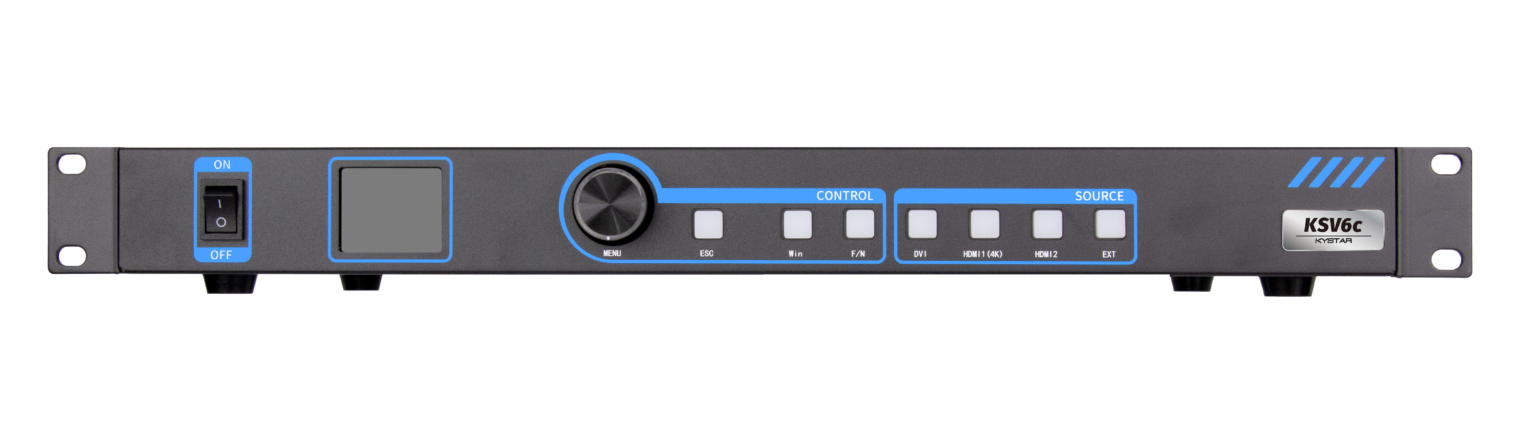
Choosing the right sending card is a technical judgement and a procurement decision: measure refresh, validate grayscale and insist on supplier support. The right combination reduces rework, eases camera capture and preserves creative intent—qualities that venues at the Edinburgh Festival Fringe and similar events prize. Kystar. — concise, tested, dependable.